

Delivering Reliable Connectivity Nationwide
Across the Philippines, infrastructure is not just about connectivity—it is about resilience. As an archipelagic nation composed of more than 7,000 islands, the country faces unique logistical and environmental challenges. Rivers swell during monsoon seasons, typhoons damage road networks, and remote communities remain vulnerable to isolation when permanent bridges are compromised. In this landscape, the Modular Steel Bridge (Bailey Bridge) has quietly emerged as one of the most practical and reliable structural solutions.
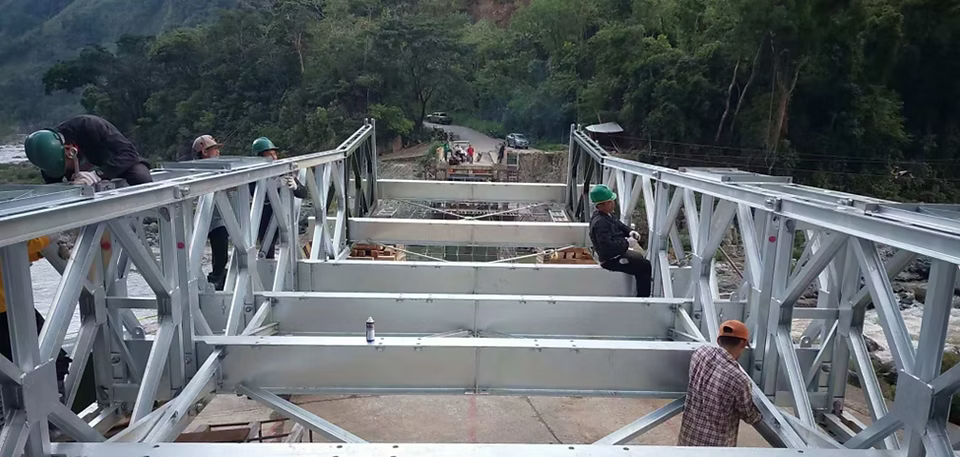
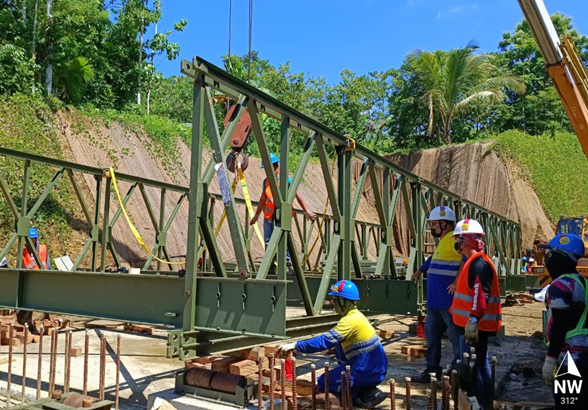
Originally developed during World War II, the Modular Steel Bridge system has evolved into a globally recognized modular steel bridge design. Its brilliance lies in simplicity. Prefabricated steel panels are assembled in a truss configuration, allowing rapid installation without the need for complex heavy equipment or extensive foundation work. What once served as a military solution has become a modern civil engineering essential – particularly in countries where speed, adaptability, and durability matter most.
The Growing Infrastructure Demand in the Philippines
The Philippines continues to expand its road networks, improve inter-island transport corridors, and strengthen disaster-response infrastructure. Government-led infrastructure programs and private-sector development projects are increasing the demand for bridging systems that can be deployed quickly while maintaining structural integrity.
Several factors drive the rising need for Modular Steel bridges nationwide:
Frequent natural disasters. Typhoons, flooding, landslides, and seismic activity regularly damage permanent bridges. Temporary but robust bridging systems are critical for emergency access and recovery operations.
Remote and rural connectivity. Many provinces still require reliable crossing solutions over rivers and ravines where permanent concrete bridges may be cost-prohibitive or time-consuming to construct.
Industrial and mining expansion. Access roads for heavy equipment often need immediate load-bearing capacity before permanent infrastructure is finalized.
Military and humanitarian logistics. Rapid deployment capability is essential in disaster-stricken or hard-to-reach areas.
Why the Modular Steel Bridge Remains Relevant Today
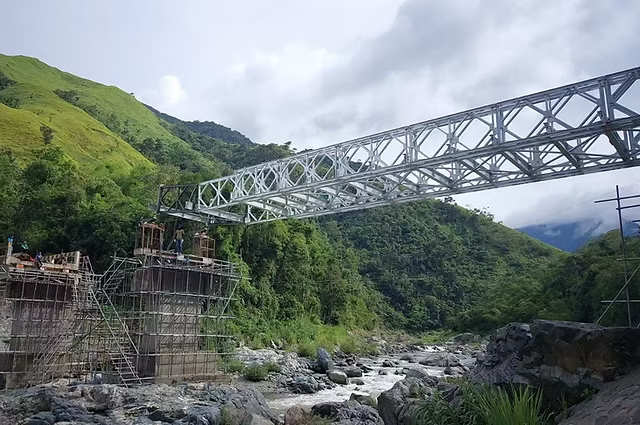
Despite advances in bridge engineering, the Modular Bridge system remains highly relevant due to its modularity and scalability. The bridge can be configured to accommodate varying span lengths and load requirements, from light vehicular traffic to heavy trucks and construction equipment.
Its panelized design allows transportation in compact sections, ideal for provincial roads where access for large equipment is limited. Moreover, components can be reused, relocated, and reassembled, providing long-term cost efficiency for government agencies and contractors alike.
Durability is another defining advantage. High-grade structural steel ensures strength under dynamic loads, while modern corrosion-protection systems extend service life even in coastal or flood-prone regions—an important consideration in the Philippine climate.
ESC Steel: A Smart and Strategic Choice
As demand for reliable modular bridge systems grows, selecting the right supplier becomes as critical as selecting the bridge type itself. ESC Steel has positioned itself as a leading provider of engineered steel solutions across Asia and even in the Middle East, delivering structural systems that meet international standards for safety and performance.
What sets ESC Steel apart is not merely supply capacity but engineering expertise. Each Modular steel bridge solution is designed with consideration for load classification, span length, soil condition, and site-specific environmental factors. Rather than offering a generic product, ESC provides tailored configurations that align with project requirements—whether for emergency deployment, temporary industrial use, or semi-permanent infrastructure.
Quality assurance is central to ESC Steel’s approach. Precision fabrication ensures dimensional accuracy for seamless panel alignment, reducing installation time on-site. Protective coatings and galvanization options enhance corrosion resistance, extending bridge lifespan in tropical and coastal environments common throughout the Philippines.
Furthermore, ESC Steel understands the importance of logistics. With established distribution channels and technical support teams, delivery and assembly guidance can be coordinated efficiently, minimizing project delays.
Supporting National Development and Disaster Resilience
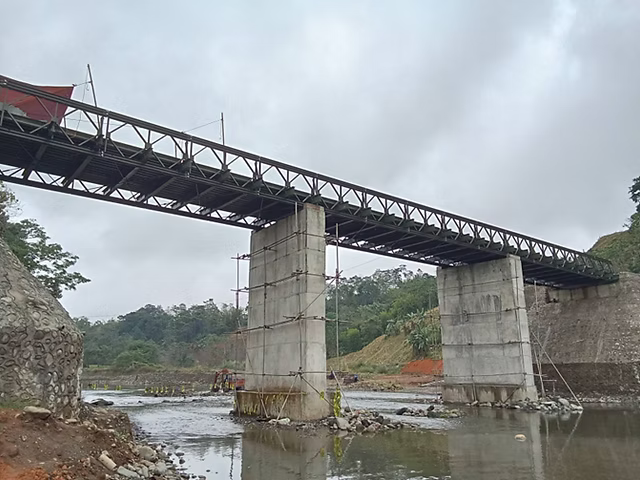
The Philippines’ geography makes it one of the most disaster-exposed countries in the world. With an average of 20 tropical cyclones entering the Philippine Area of Responsibility each year, combined with mountainous terrain and river-dense provinces, infrastructure disruption is not a question of if—but when.
Technical Relevance of Modular Bridge Systems
As the Philippines strengthens its infrastructure resilience strategy, the role of modular steel bridge systems has become increasingly significant in both emergency and programmed works. For the National agencies and Local Government Units (LGUs), responsible for transport continuity, modular bridge systems offer a technically sound and time-efficient alternative to conventional cast-in-place reinforced concrete bridges—particularly in disaster-prone and geographically challenging areas.
The country’s exposure to typhoons, seismic activity, and high-intensity rainfall events places recurring stress on bridge structures, especially in floodplains, mountainous corridors, and remote provincial road networks. Regions such as Central Luzon, Cagayan Valley, Bicol, Eastern Visayas, CAR, and parts of Mindanao consistently experience bridge undermining, abutment scouring, slope failures, and struct
Structurally, the Modular Bridge utilizes panelized truss sections connected via high-strength pins, forming a simply supported or multi-span configuration depending on site conditions. The modularity allows configuration adjustments in:
Span length
Load classification (light to heavy vehicular loading)
Single, double, or triple truss reinforcement
Single or double story configurations for increased moment capacity
Emergency bridge replacement after flood or landslide damage
Temporary detours during permanent bridge reconstruction
Rural access bridges in remote barangays
Military and humanitarian logistics corridors
Industrial and mining access roads
Engineering Consider
Feature | ESC Modular Steel Bridge (Bailey Bridge) | Conventional Bridge |
Installation Time | Days to weeks | Several months to years |
Equipment Required | Minimal heavy machinery | Extensive equipment & civil works |
Foundation Works | Often minimal or temporary | Deep foundations required |
Cost | Lower upfront cost | High capital expenditure |
Flexibility | Modular & reconfigurable | Fixed design |
Relocation | Can be dismantled & reused | Permanent structure |
Emergency Deployment | Ideal for rapid response | Not suitable for urgent installation |
Access to Remote Areas | Highly suitable | Challenging & expensive |
Engineering Considerations for Flood- and Landslide-Prone Areas
In high-risk regions such as Bulacan and Pampanga (floodplain zones), Cagayan and Isabela (river basin exposure), Benguet and Mountain Province (slope instability), and Leyte and Samar (typhoon corridor), bridge design must account for:
Hydraulic loading and debris impact forces
Scour potential at abutments and piers
Dynamic vehicular loads
Seismic considerations under NSCP guidelines
Corrosion resistance in tropical and coastal environments
High-grade structural steel panels, combined with galvanization or protective coating systems, significantly enhance durability against humidity, salinity, and prolonged rainfall exposure. Proper bearing design and foundation interface are critical to ensure stability when installed over compromised soil conditions.
Procurement and Tender Advantages
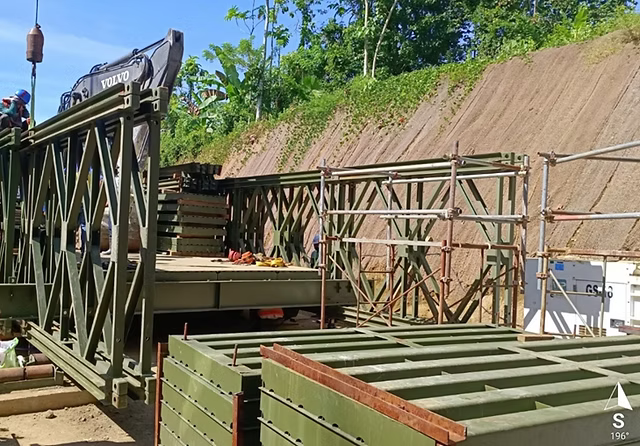
From a procurement perspective, modular bridge systems align well with government objectives of:
Accelerated project timelines
Cost-effective deployment
Reusability of structural components
Reduced mobilization complexity
Scalability for multiple sites
ESC Steel as a Technical Partner for Government Projects
For National and LGU-led projects, supplier capability extends beyond product availability. It requires engineering validation, fabrication precision, and logistical reliability.
ESC Steel provides modular steel bridge systems fabricated under strict quality assurance processes, ensuring structural integrity and dimensional consistency. Engineering support includes load configuration assessment, span optimization, and technical coordination to align with project specifications.
Protective coating options suitable for Philippine climatic conditions enhance long-term performance, particularly in flood-prone and coastal provinces. Fabrication expertise ensures compatibility of truss panels, transoms, stringers, and decking systems, facilitating efficient on-site assembly.
Supporting Resilient Infrastructure Development
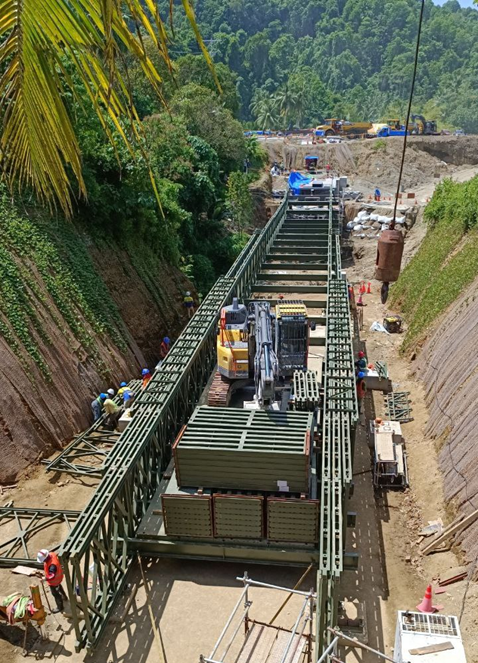
The increasing frequency of climate-related disruptions underscores the need for infrastructure systems that combine speed, strength, and adaptability. For agencies tasked with maintaining transport continuity, modular bridge systems provide a proven engineering solution capable of restoring connectivity within compressed timelines.
As the Philippines advances its infrastructure modernization programs, modular steel bridge systems will continue to play a vital role—particularly in provinces vulnerable to flooding, landslides, and seismic activity.
In this evolving landscape, technical reliability and supply capability become decisive factors. Through engineered solutions and project-focused coordination, ESC Steel stands positioned as a strategic partner in supporting resilient, government-grade modular steel bridge deployment across the Philippines
For modular steel bridge projects, partner with ESC Steel Philippines—your trusted source for resilient infrastructure solutions. Contact Us Today:
📞 +632 8526 8839
📱+63 920 504 3801